
Biology field guide
Skin, gills and soft tissue shaped by water and pressure
Skin can exchange gases, display blood flow, reduce friction or respond to pressure. Soft and folded tissue should be interpreted in the environment where it functions.
Animals in this guide
5 connected profiles
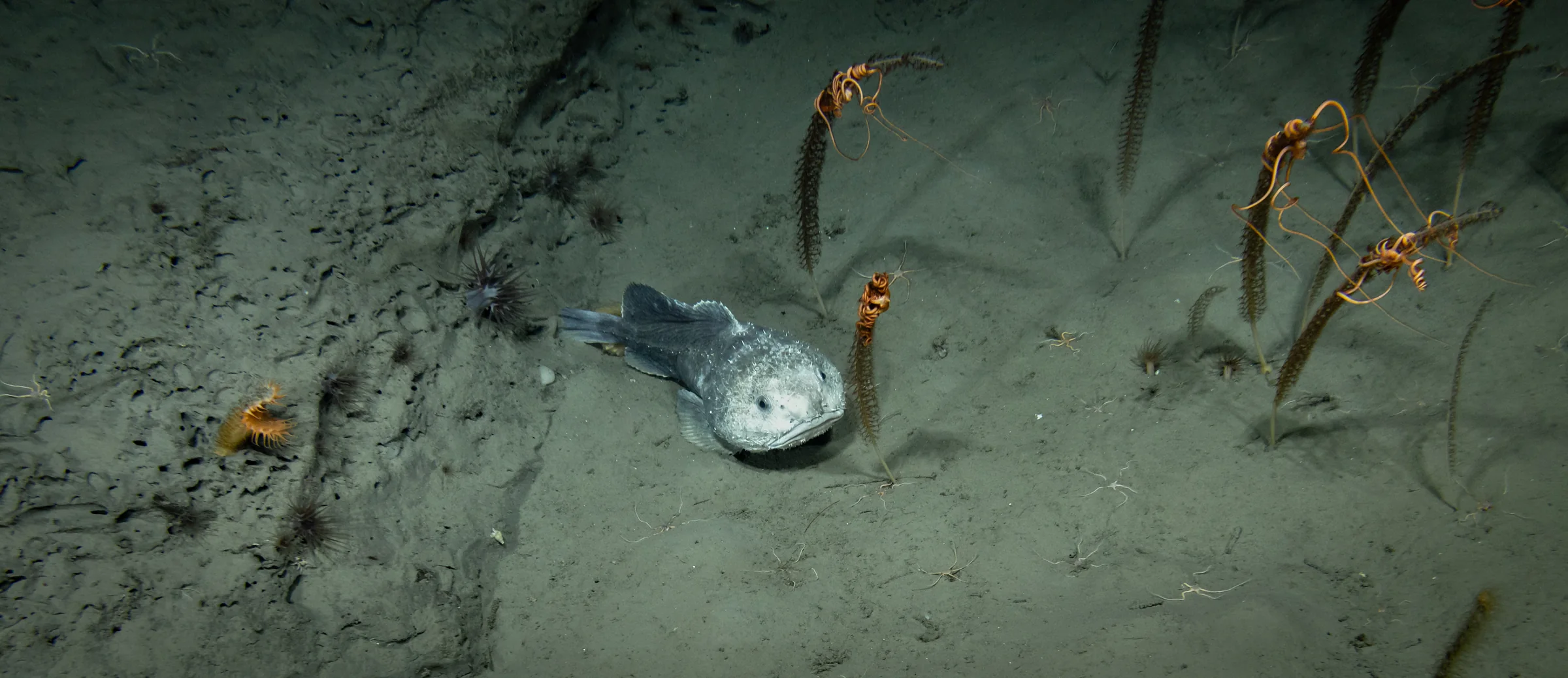
Fish
Blobfish
Its soft deep-sea body can lose its shape after capture and rapid decompression.
Read profile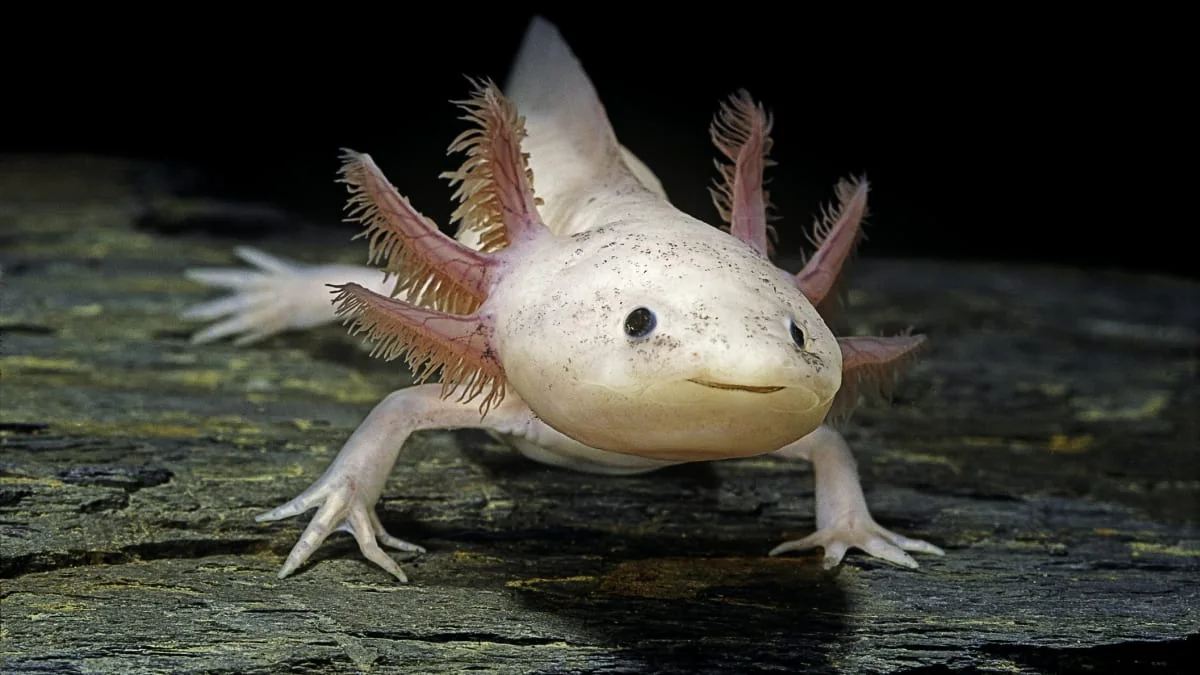
Amphibian
Axolotl
The feathery structures behind the head are external gills. They increase the surface available for gas exchange and are a normal part of the adult animal.
Read profile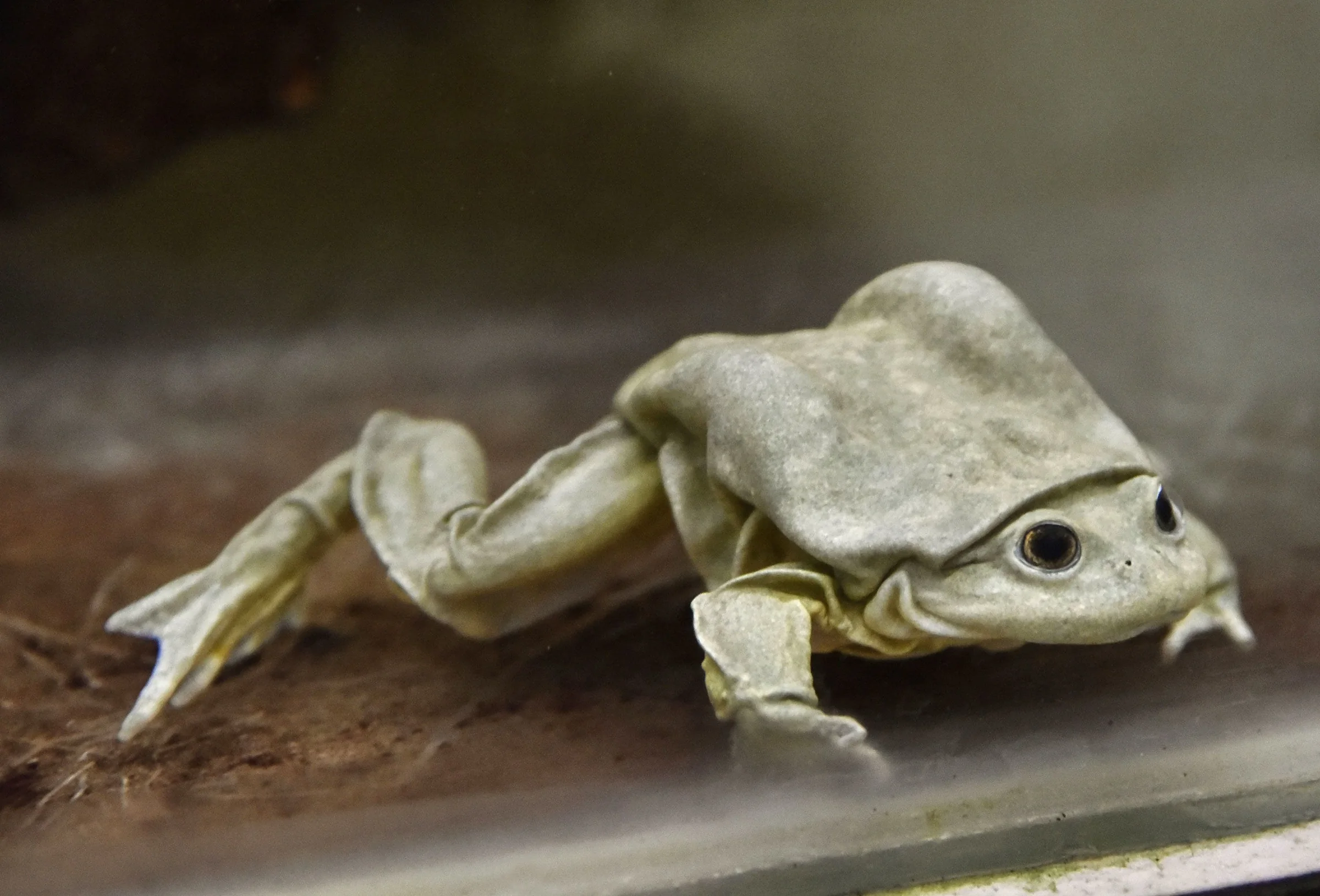
Amphibian
Titicaca water frog
The folds are respiratory surface, not excess skin without a purpose. They increase contact with water so oxygen can pass across the skin.
Read profile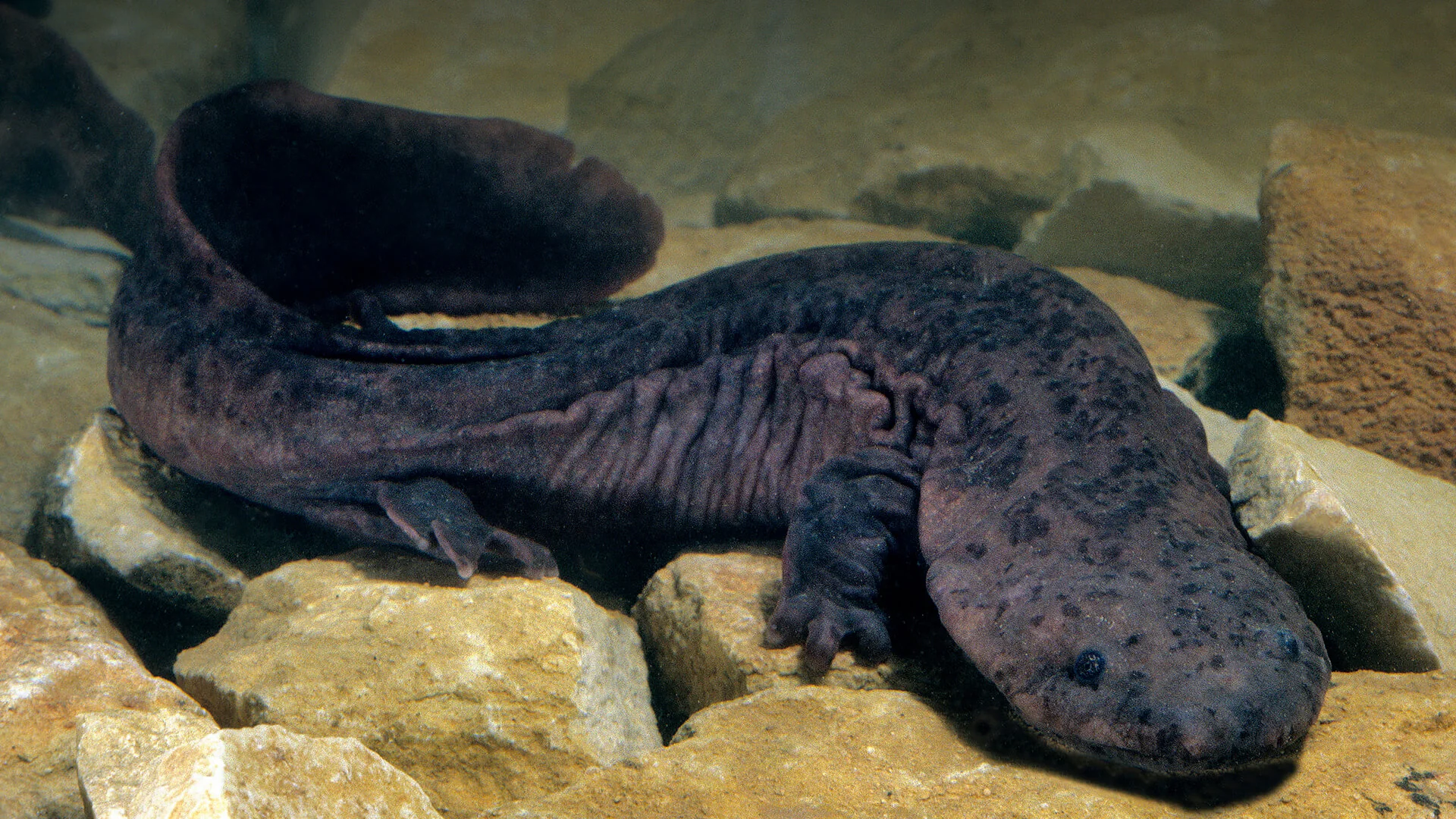
Amphibian
Chinese giant salamander
Skin folds add surface area for gas exchange. Sensory nodes along the body detect vibration, compensating for small eyes and poor vision.
Read profile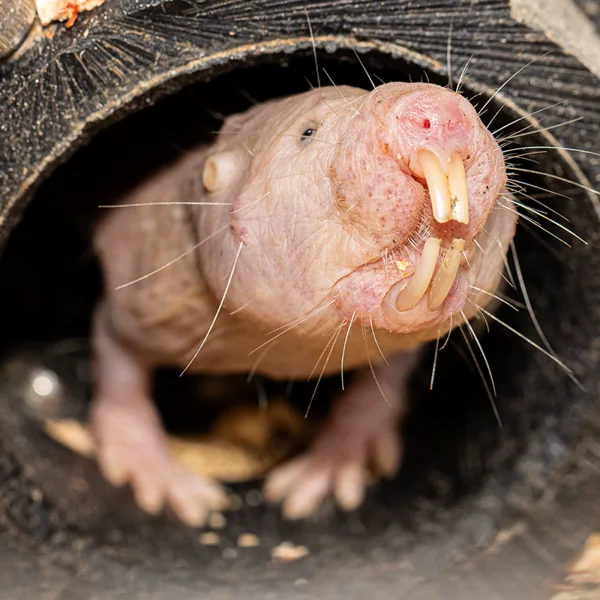
Mammal
Naked mole-rat
It is not completely hairless. Fine sensory hairs help it navigate tunnels, while large front teeth dig through compacted soil without filling the mouth with dirt.
Read profile01
How can exposed tissue support breathing?
Axolotl gills place delicate respiratory filaments outside the body. Titicaca water frogs and Chinese giant salamanders increase contact with water through folded skin.
More surface area can improve gas exchange, but each species also depends on suitable temperature, oxygen and water quality. The visible tissue does not work independently of its habitat.
02
Why does soft tissue look different outside its habitat?
A blobfish photographed alive underwater retains a recognisable fish shape. A specimen damaged during capture and rapid ascent can look dramatically different after water support and deep-water conditions are removed.
Naked mole-rats show another kind of exposed-looking skin. They are not completely hairless, and sparse sensory hairs remain useful in dark tunnels. Appearance alone does not reveal how the tissue functions.
03
What other jobs can skin perform?
Skin forms a barrier, carries sensation and colour, exchanges heat and sometimes contributes to breathing. Bald uakari facial skin makes blood flow visible, while sparse hairs on a naked mole-rat still provide tactile information.
Calling skin bare, wrinkled or slimy describes only its appearance. Thickness, moisture, blood supply, glands and contact with air, water or soil determine what the surface can do.
04
Why do water quality and temperature matter to exposed tissue?
Gills and permeable skin place living cells close to the environment. That short path can improve gas exchange, but it also means changes in oxygen, pollutants, temperature or disease can have direct effects.
The most visible structure is therefore only one part of the explanation. A healthy axolotl, water frog or salamander also needs the physical and chemical conditions in which that tissue can function.
Continue exploring
Compare this guide with the wider collection.