
Habitat field guide
Underground animals shaped by darkness, soil and narrow space
Soil removes long-distance vision and resists every movement. Successful burrowers need compact bodies, digging tools, sensitive touch and ways to breathe and communicate in enclosed spaces.
Animals in this guide
4 connected profiles
Mammal
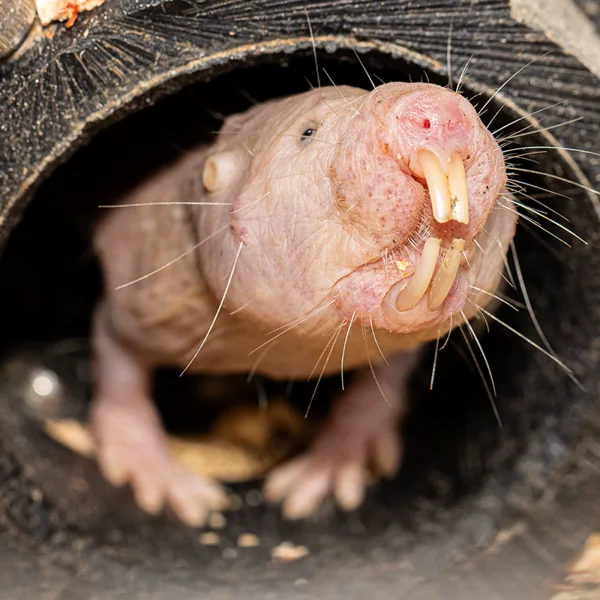
Naked mole-rat
It is not completely hairless. Fine sensory hairs help it navigate tunnels, while large front teeth dig through compacted soil without filling the mouth with dirt.
Read profile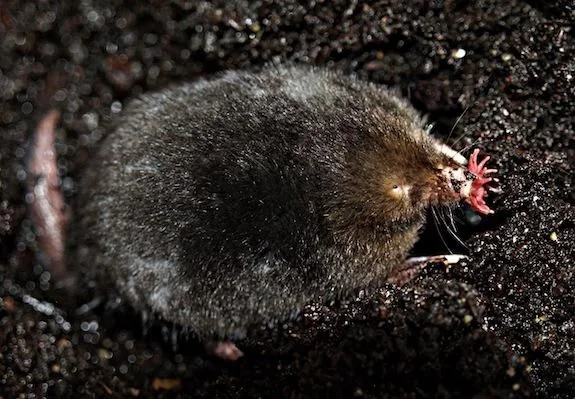
Mammal
Star-nosed mole
The star does not sting or grasp like a hand. Its rays repeatedly touch the environment and send detailed tactile information to the brain.
Read profile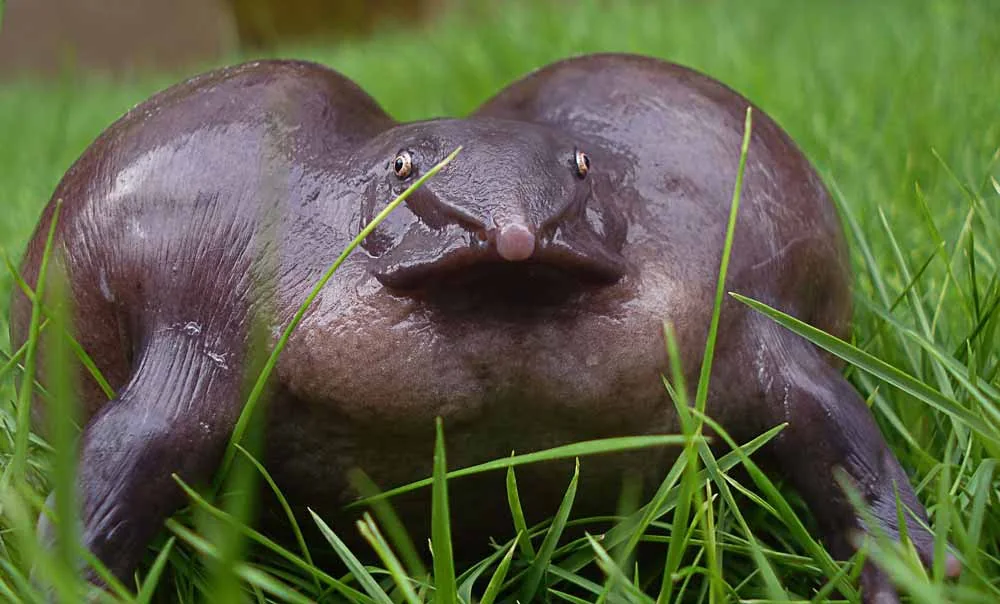
Amphibian
Purple frog
A compact body and reinforced limbs push through soil, while the narrow snout helps the frog work around underground feeding spaces.
Read profile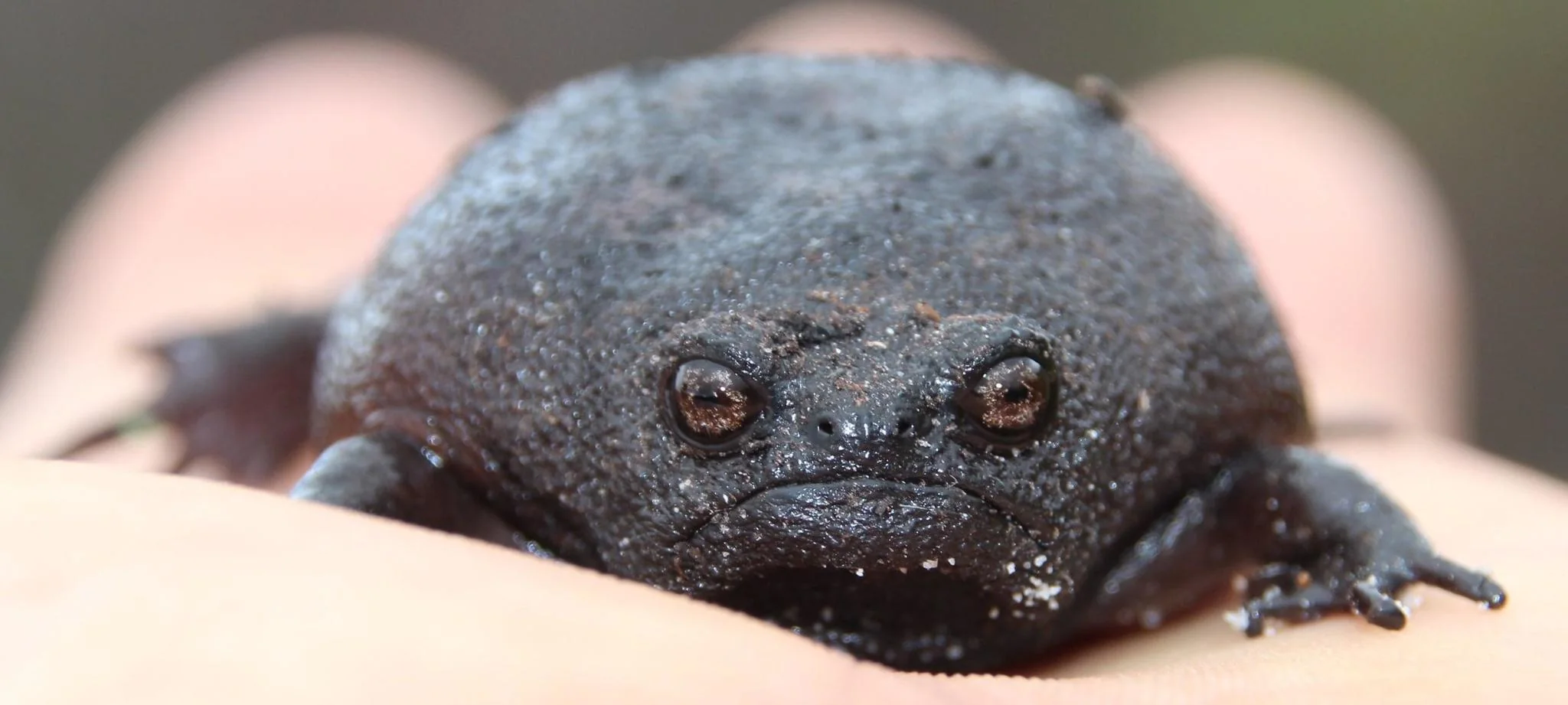
Amphibian
Black rain frog
Short muscular limbs push soil aside. The compact round body is stable underground, while inflation can make the frog harder for a predator to pull from a burrow.
Read profile01
What makes an effective digging body?
Naked mole-rats cut compacted soil with projecting incisors. Purple frogs and black rain frogs use short, powerful limbs to move through or into the ground, while the star-nosed mole combines strong forelimbs with a compact body.
Burrowing is not one technique. Teeth, forelimbs and hind limbs can each become the main digging tool, depending on the animal's ancestry and the soil it occupies.
02
How do animals navigate without useful light?
The star-nosed mole reads its surroundings through repeated contact with 22 nose rays. Naked mole-rats retain sparse sensory hairs that help detect tunnel walls and nearby movement.
A reduced reliance on vision is not a defect when light is absent. Touch, smell, vibration and the layout of a stable tunnel system can provide more useful information than detailed eyesight.
03
What is the climate inside a burrow?
Soil buffers some changes in surface temperature and humidity, but an enclosed tunnel also limits air movement. Depth, soil type, rainfall and the number of occupants affect heat, moisture and gas exchange.
Animals respond through burrow design and behaviour as well as anatomy. They may change tunnel depth, plug openings, gather in chambers or emerge only when surface conditions are suitable.
04
Why does an underground animal still depend on the surface?
Food enters the system through roots, insects, plant material and seasonal breeding events. Purple frogs surface during monsoon rains, while other burrowers depend on vegetation or prey produced above them.
Compacted soil, cultivation, altered rainfall and construction can damage an underground habitat without the animal being visible. Protecting burrowers means protecting the soil profile and the surface processes that support it.
Continue exploring
Compare this guide with the wider collection.