
Habitat field guide
Freshwater animals built for rivers, lakes and wetlands
Fresh water can be cold, muddy, fast, still, oxygen-poor or seasonally reduced. Animals living there need ways to breathe, sense movement, remain hidden and feed without losing control in water.
Animals in this guide
7 connected profiles
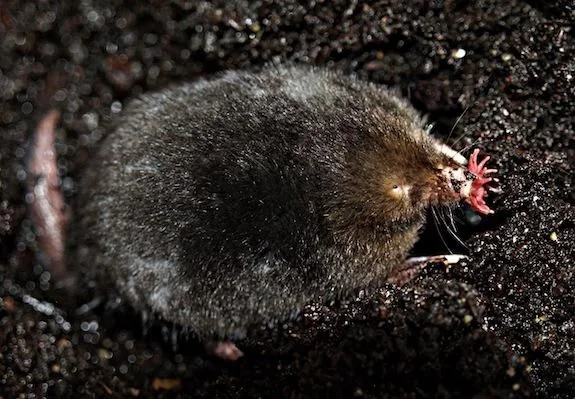
Mammal
Star-nosed mole
The star does not sting or grasp like a hand. Its rays repeatedly touch the environment and send detailed tactile information to the brain.
Read profile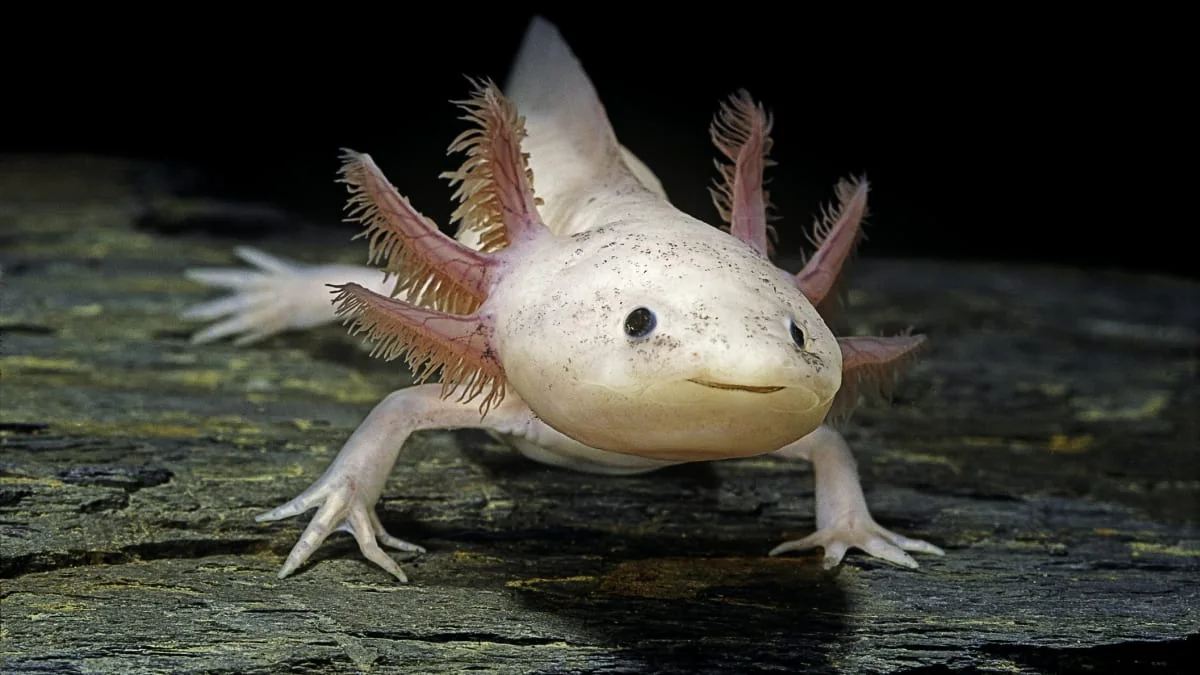
Amphibian
Axolotl
The feathery structures behind the head are external gills. They increase the surface available for gas exchange and are a normal part of the adult animal.
Read profile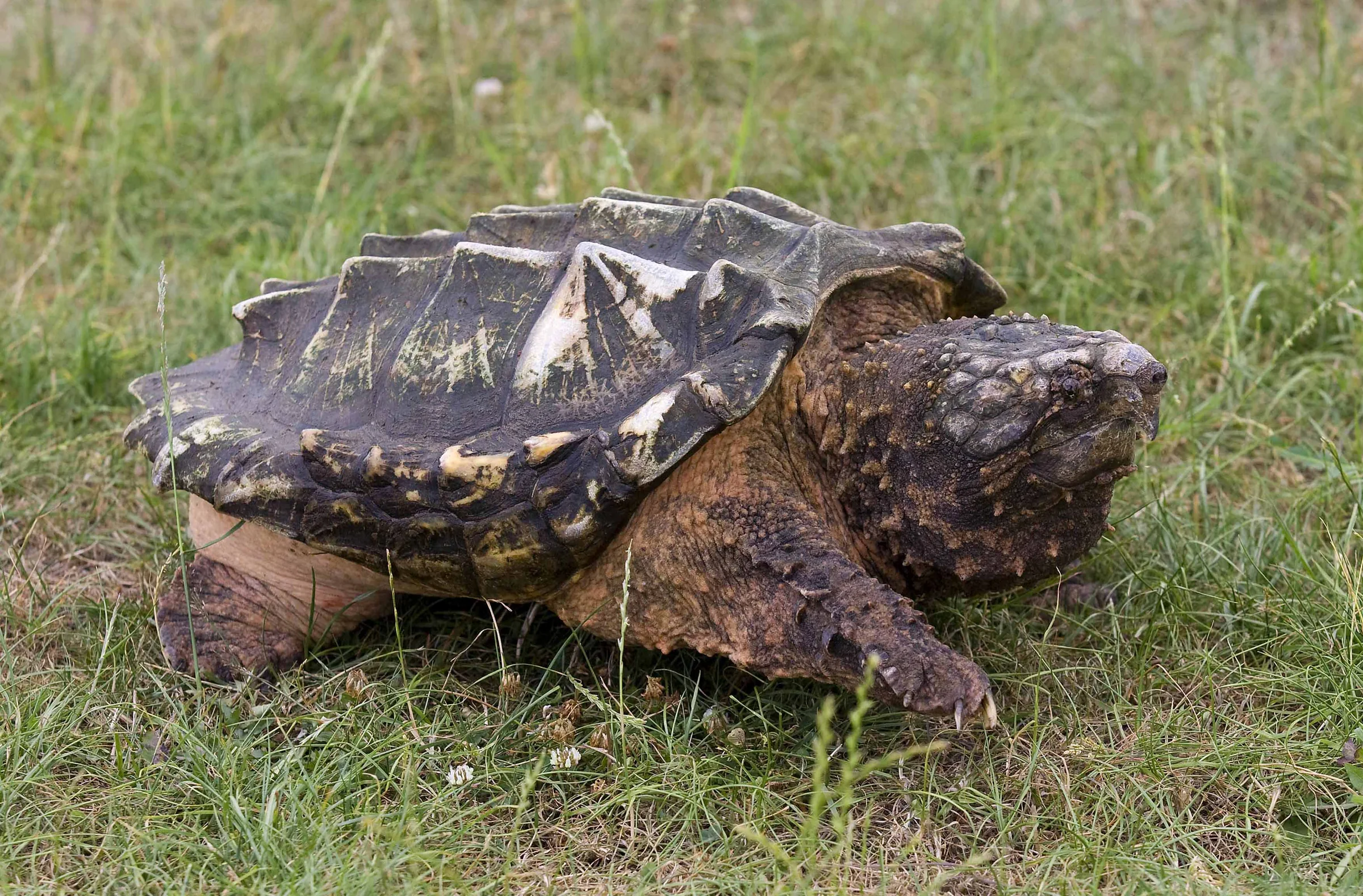
Reptile
Alligator snapping turtle
The pink tongue tip resembles a small worm. A motionless turtle can open its mouth and move the lure to bring curious prey within striking distance.
Read profile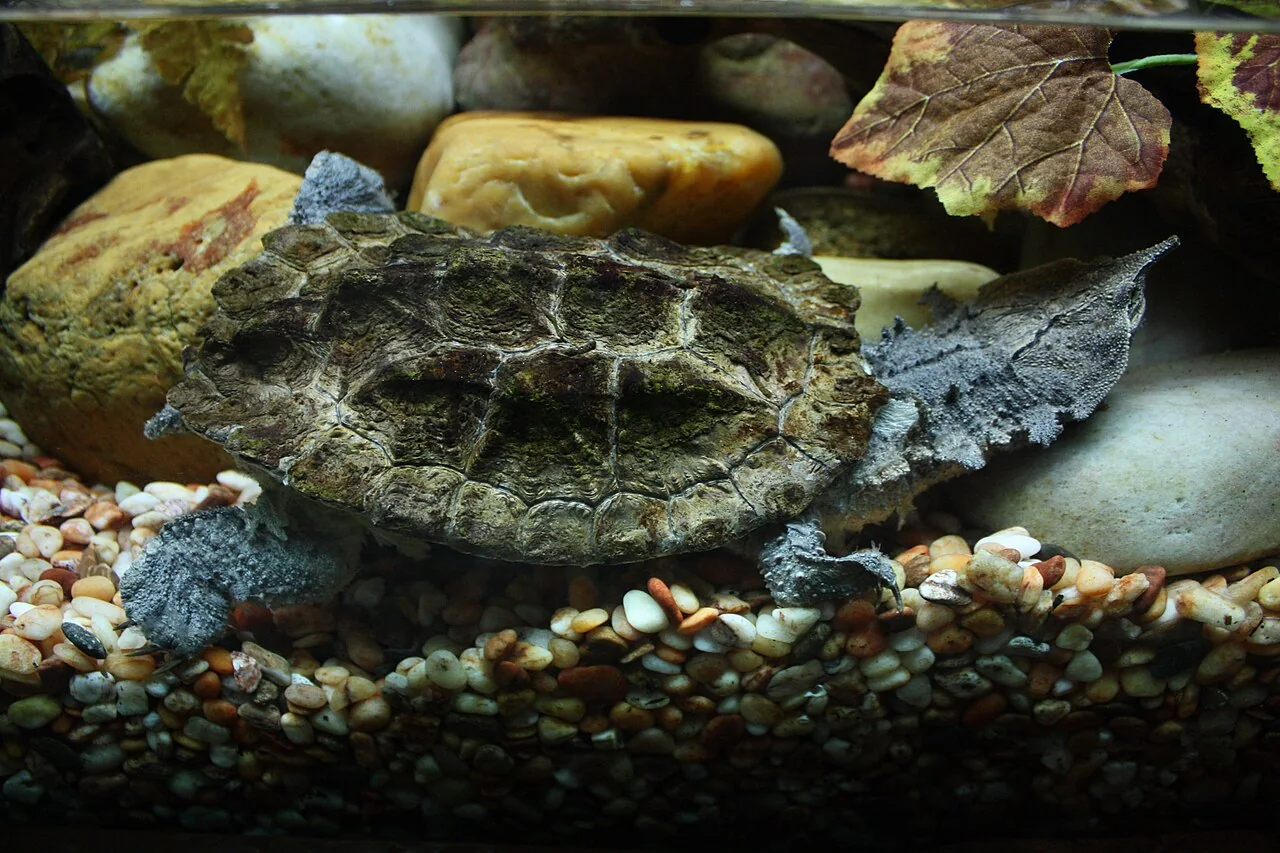
Reptile
Mata mata turtle
Fringes and ridges blur the turtle's outline. When prey comes close, the mouth opens rapidly and draws in water and the animal together.
Read profile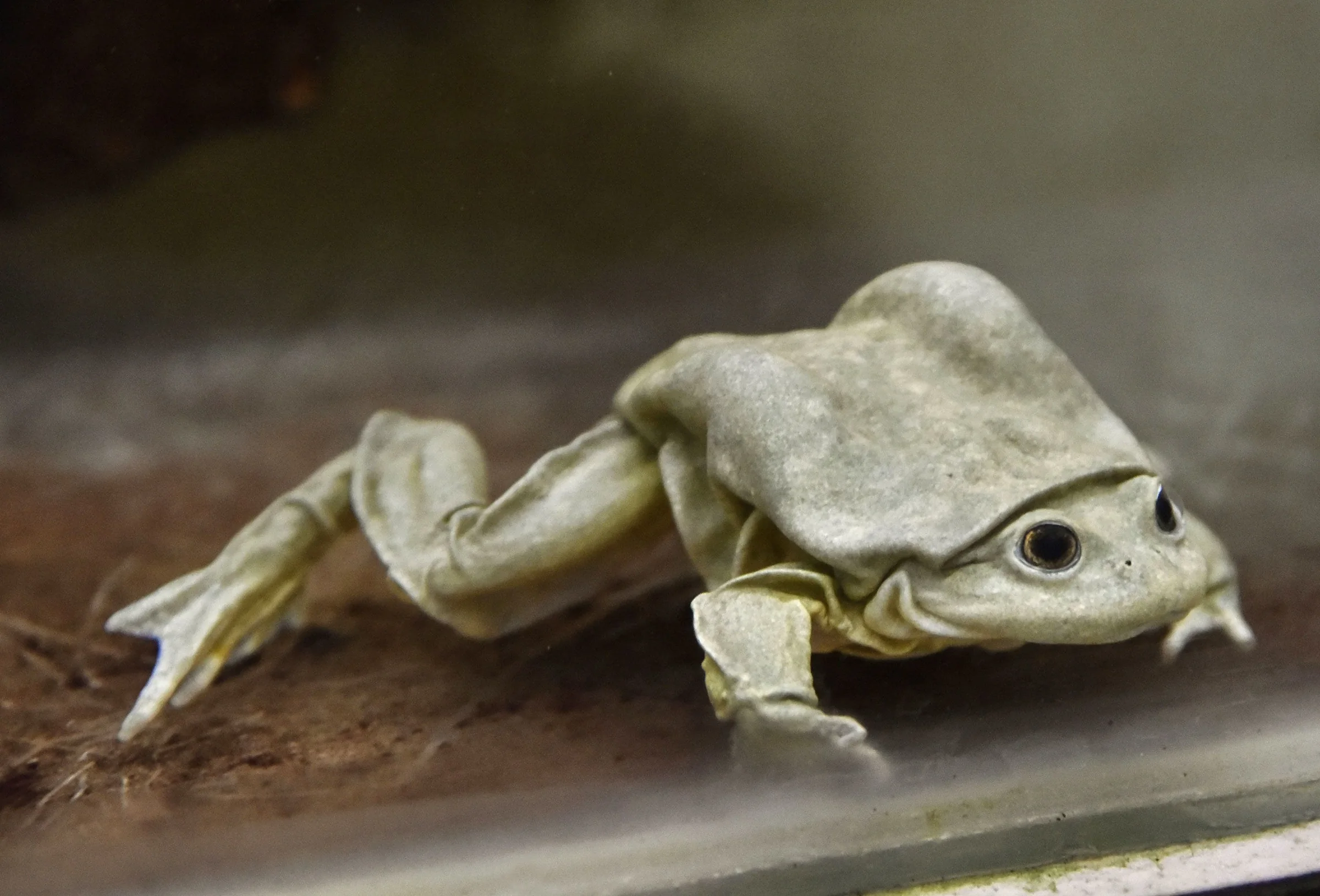
Amphibian
Titicaca water frog
The folds are respiratory surface, not excess skin without a purpose. They increase contact with water so oxygen can pass across the skin.
Read profile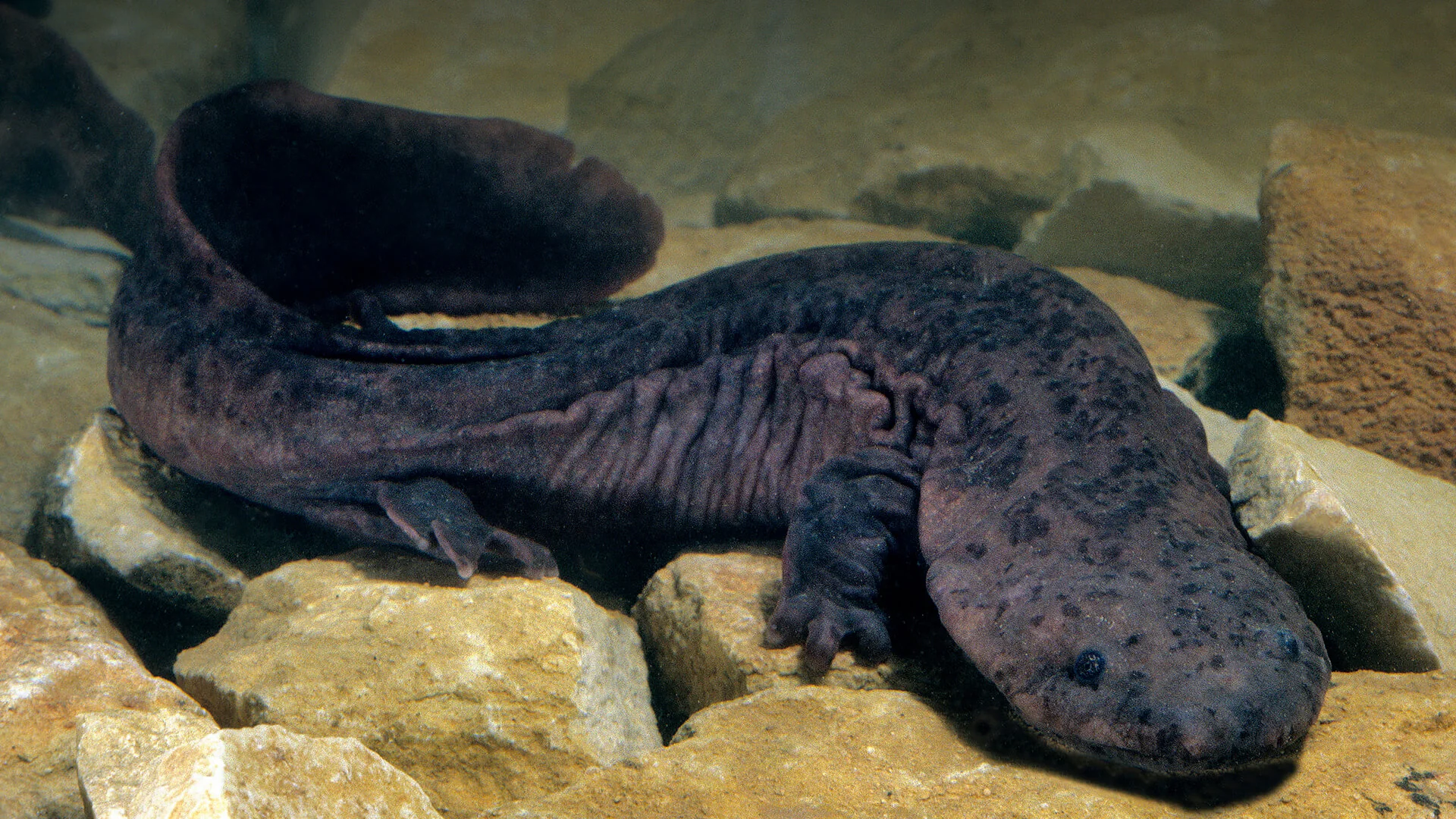
Amphibian
Chinese giant salamander
Skin folds add surface area for gas exchange. Sensory nodes along the body detect vibration, compensating for small eyes and poor vision.
Read profile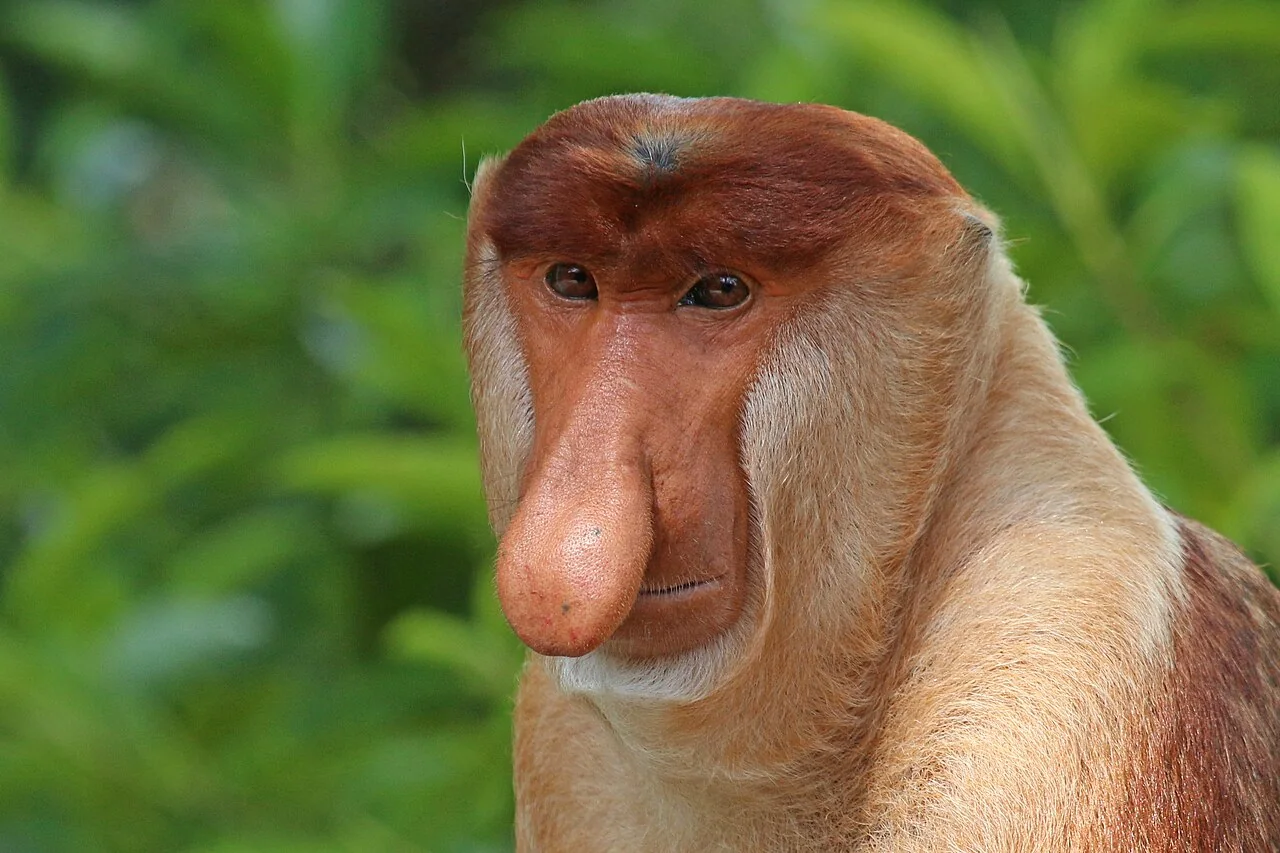
Mammal
Proboscis monkey
The male's nose is a sexually dimorphic trait. It is much larger than the female's and contributes to how males look and sound to other monkeys.
Read profile01
How do freshwater animals obtain oxygen?
Axolotls retain external gills as adults. Titicaca water frogs and Chinese giant salamanders use folded skin to increase the surface available for gas exchange. Each structure keeps more respiratory tissue in contact with water.
The same visible feature does not mean the same life history. An axolotl is a paedomorphic salamander, the Titicaca water frog is a fully aquatic frog and a giant salamander combines skin respiration with a very different body plan.
02
How do animals feed when water hides the target?
Mata mata turtles use camouflage and rapid suction feeding. Alligator snapping turtles remain still and move a worm-like tongue lure. Star-nosed moles identify small prey through rapid touch in saturated soil and shallow water.
River and wetland animals also depend on intact banks, clean water and connected habitat. A body adapted to one aquatic system may have few alternatives when pollution, drainage or barriers change that system.
03
How do flow, temperature and depth change freshwater life?
A cold mountain stream, a shallow marsh and a high-altitude lake impose different demands. Current affects how an animal holds position, temperature changes metabolism and oxygen availability, and seasonal water levels can open or remove feeding and breeding habitat.
Flattened bodies, strong limbs and sheltered behaviour may help in current. In still or muddy water, touch, smell, suction and camouflage can matter more. Freshwater is a broad category, not one uniform habitat.
04
Why are specialised freshwater animals vulnerable to change?
Rivers and wetlands collect what happens across the surrounding landscape. Pollution, sediment, invasive species, dams and drainage can alter oxygen, temperature, prey and movement routes at the same time.
An animal restricted to one lake, canal system or river region cannot simply relocate to any water body. Conservation therefore depends on water quality and connectivity as well as direct protection of the animal.
Continue exploring
Compare this guide with the wider collection.