
Habitat field guide
Grassland animals adapted to dust, distance and exposure
Open habitats expose animals to heat, cold, dust and long distances between resources. Bodies must support movement, feeding and communication without the shelter provided by dense forest.
Animals in this guide
5 connected profiles
Mammal
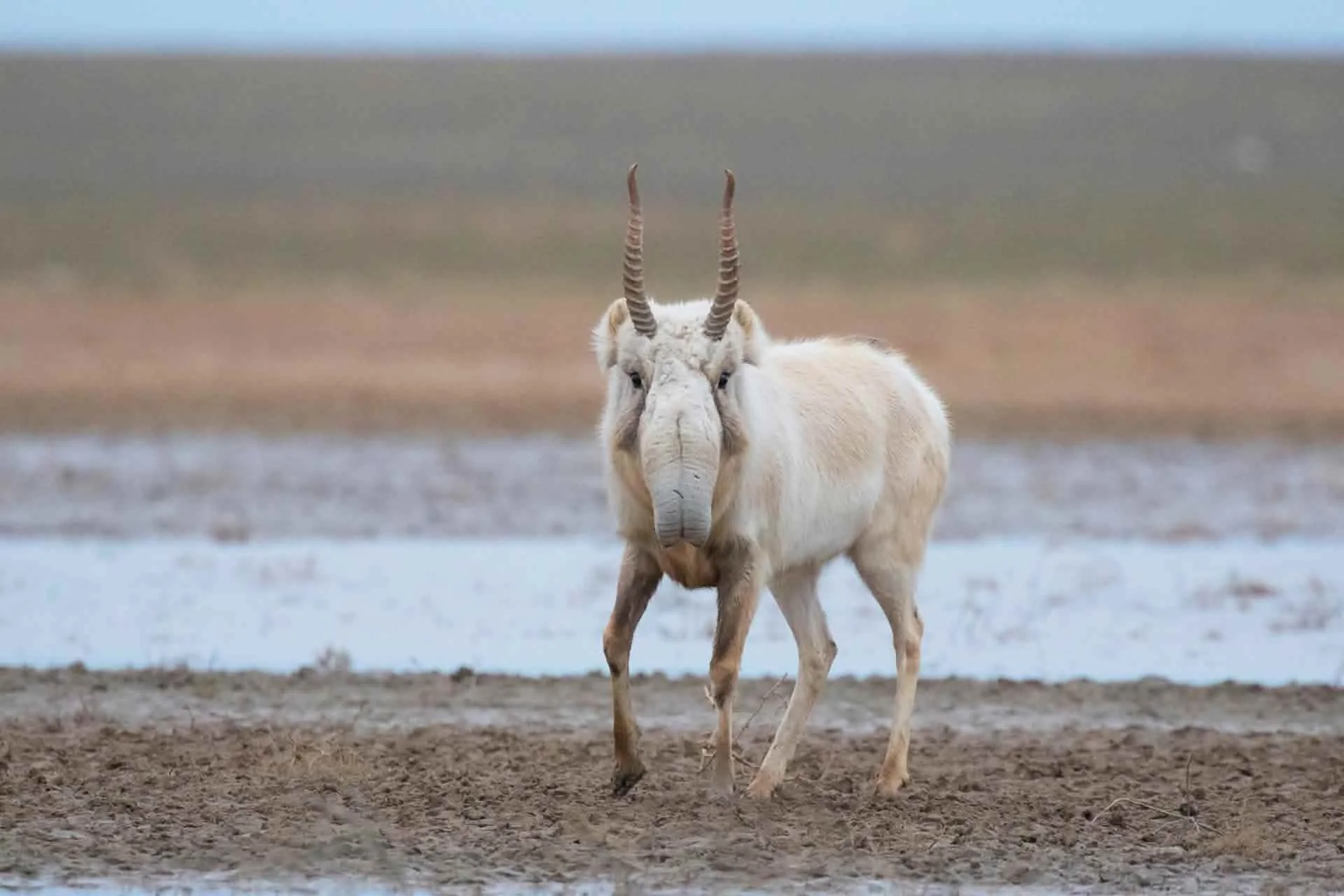
Saiga antelope
The enlarged nasal passages filter airborne dust and help warm and humidify cold air before it reaches the lungs.
Read profile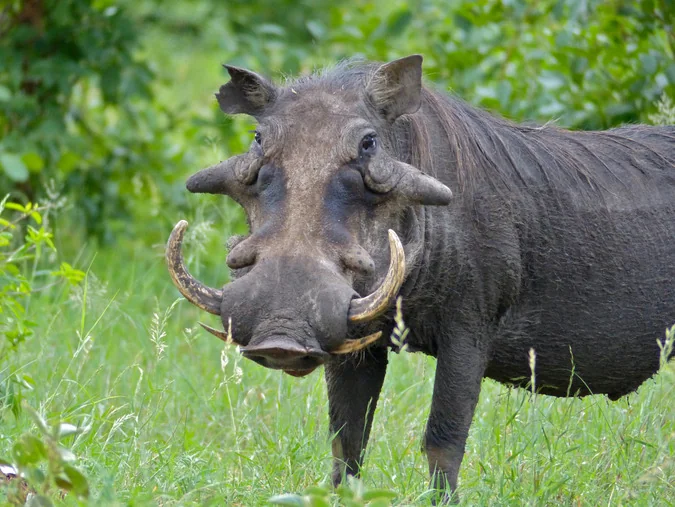
Mammal
Common warthog
Facial pads cushion the head during clashes. Curved tusks defend, display and help move soil, while the broad snout grazes close to the ground.
Read profile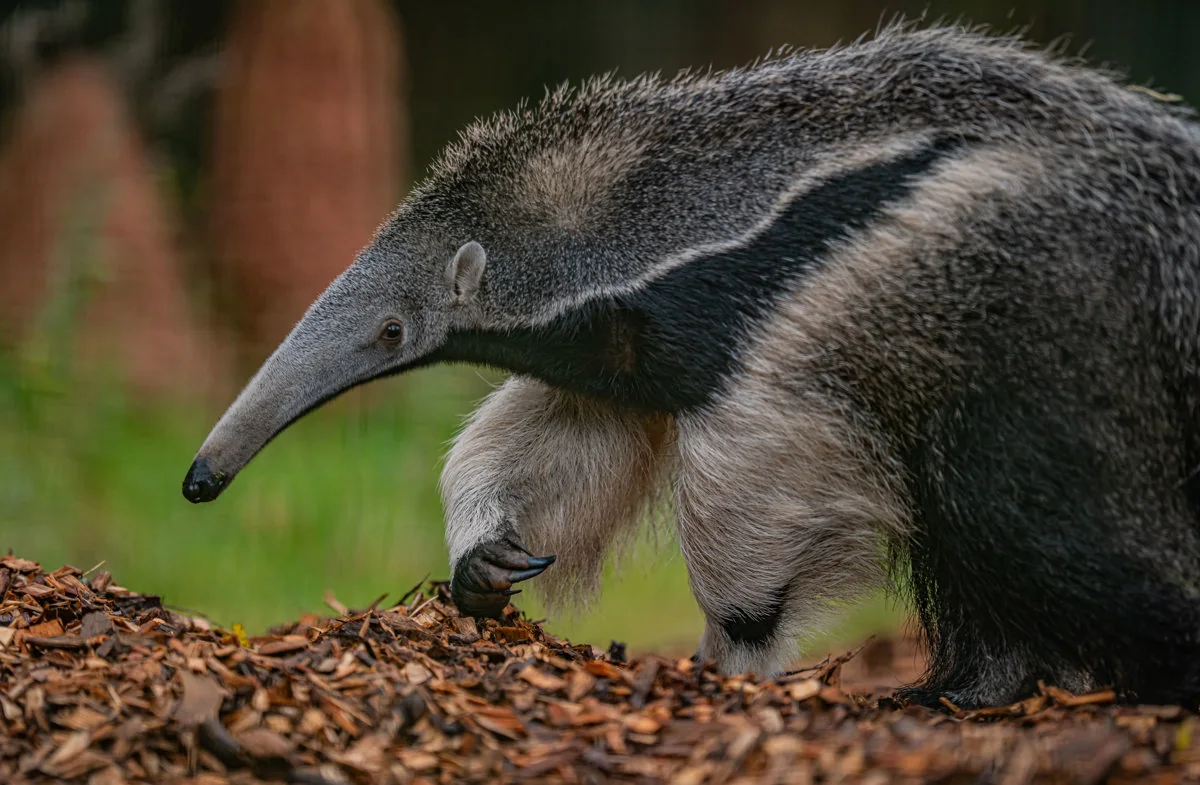
Mammal
Giant anteater
Claws break the nest, smell locates the insects and a saliva-coated tongue enters narrow chambers. The long skull is a housing for specialised feeding equipment.
Read profile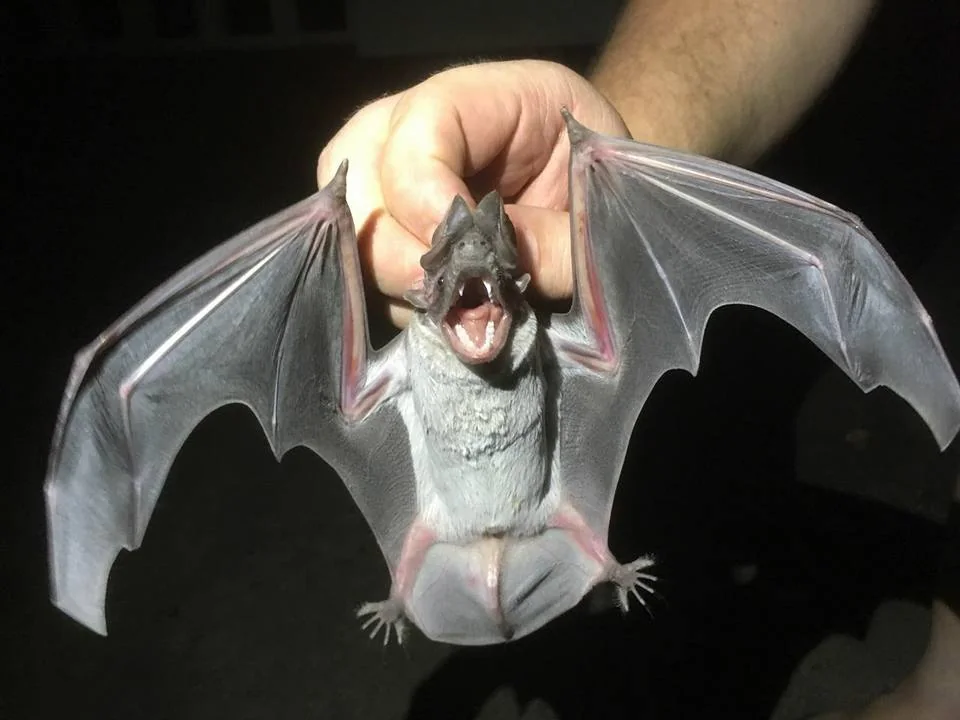
Mammal
Angolan free-tailed bat
Long narrow wings trade tight turning for efficient fast flight. The exposed tail and broad tail membrane help control pursuit of flying insects.
Read profile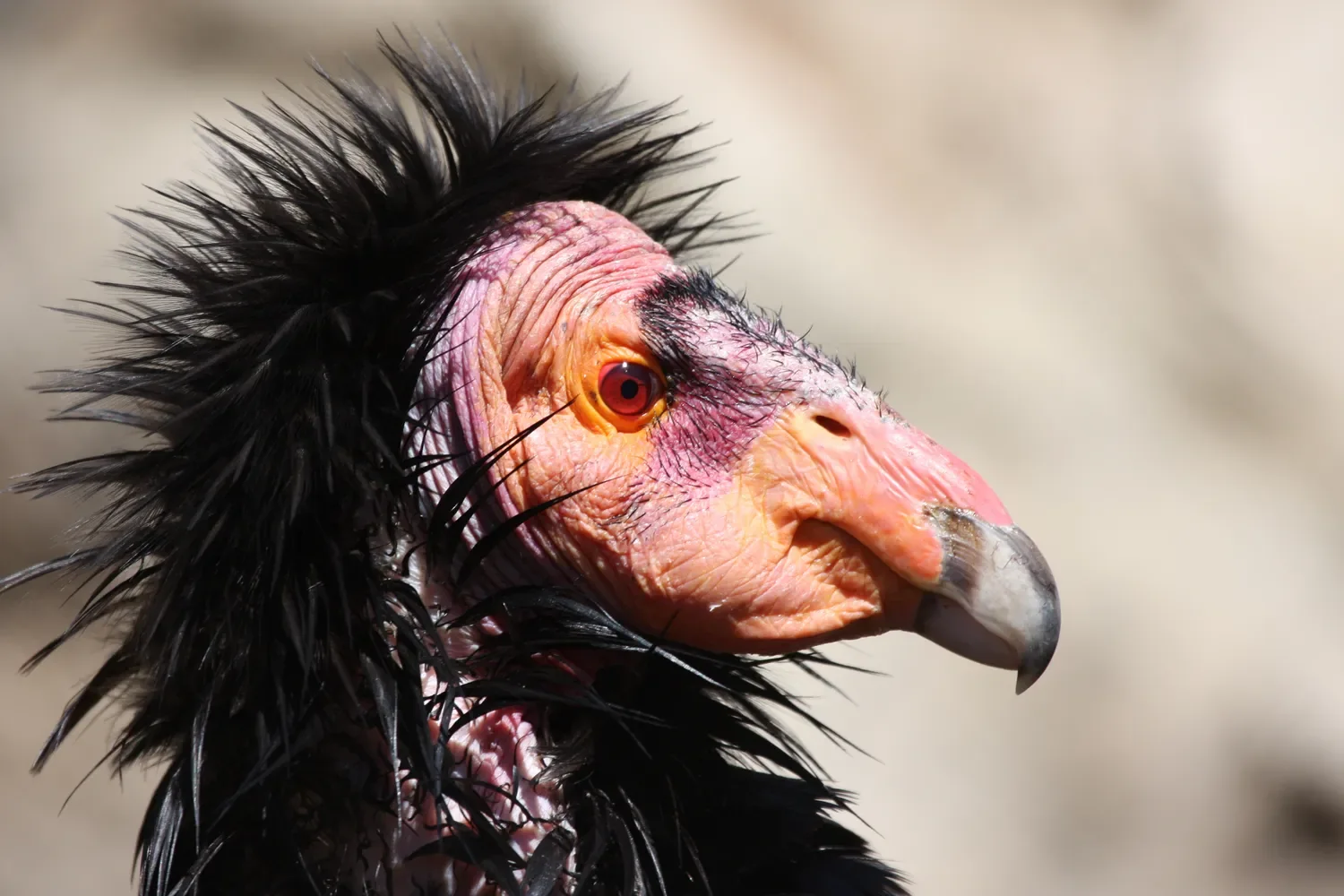
Bird
California condor
A featherless head is practical for a bird that reaches into carcasses. Exposed skin is easier to clean than blood-soaked feathers and can change colour during excitement.
Read profile01
How do animals manage dust and distance?
The saiga's enlarged nasal passages filter dust and condition cold air. Angolan free-tailed bats use long, narrow wings for efficient fast flight across open air, while California condors use broad wings and rising air to cover large areas.
These features reduce the cost of moving or breathing in exposed landscapes. They do not make the animals independent of habitat, because migration routes, roosts, cliffs and feeding areas still need to remain connected.
02
How do open-country animals reach difficult food?
Warthogs combine a broad grazing snout with tusks that defend and help move soil. Giant anteaters use smell, claws and a long tongue to exploit social insects without needing teeth.
Dry seasons change what is available. Flexible movement and specialised feeding can help, but fences, roads and land conversion can interrupt the space these animals need.
04
Why do grassland animals need connected routes?
Rainfall and plant growth move across a landscape. Grazers, scavengers and flying animals may travel far between feeding areas, water, roosts and breeding sites rather than use one small territory all year.
Fences, roads, poisoning and land conversion can break those routes. A species may retain its specialised nose, wings or feeding tools yet still decline when the places linking its life cycle disappear.
Continue exploring
Compare this guide with the wider collection.