
Habitat field guide
Deep-sea animals shaped by darkness, pressure and scarce food
The deep ocean removes sunlight, separates predators from prey and places bodies under intense pressure. Features that look exaggerated at the surface often conserve energy or improve the chance of finding one rare meal.
Animals in this guide
4 connected profiles
Fish
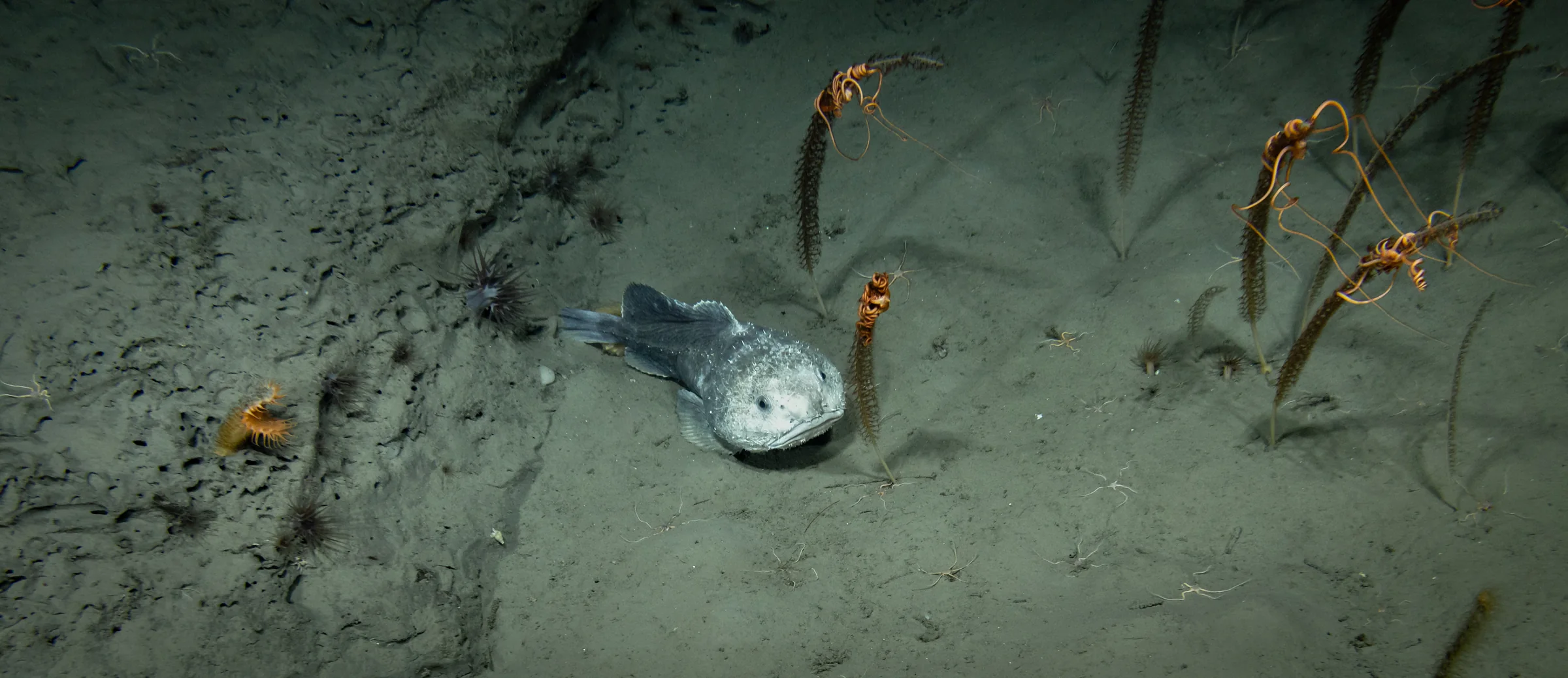
Blobfish
Its soft deep-sea body can lose its shape after capture and rapid decompression.
Read profile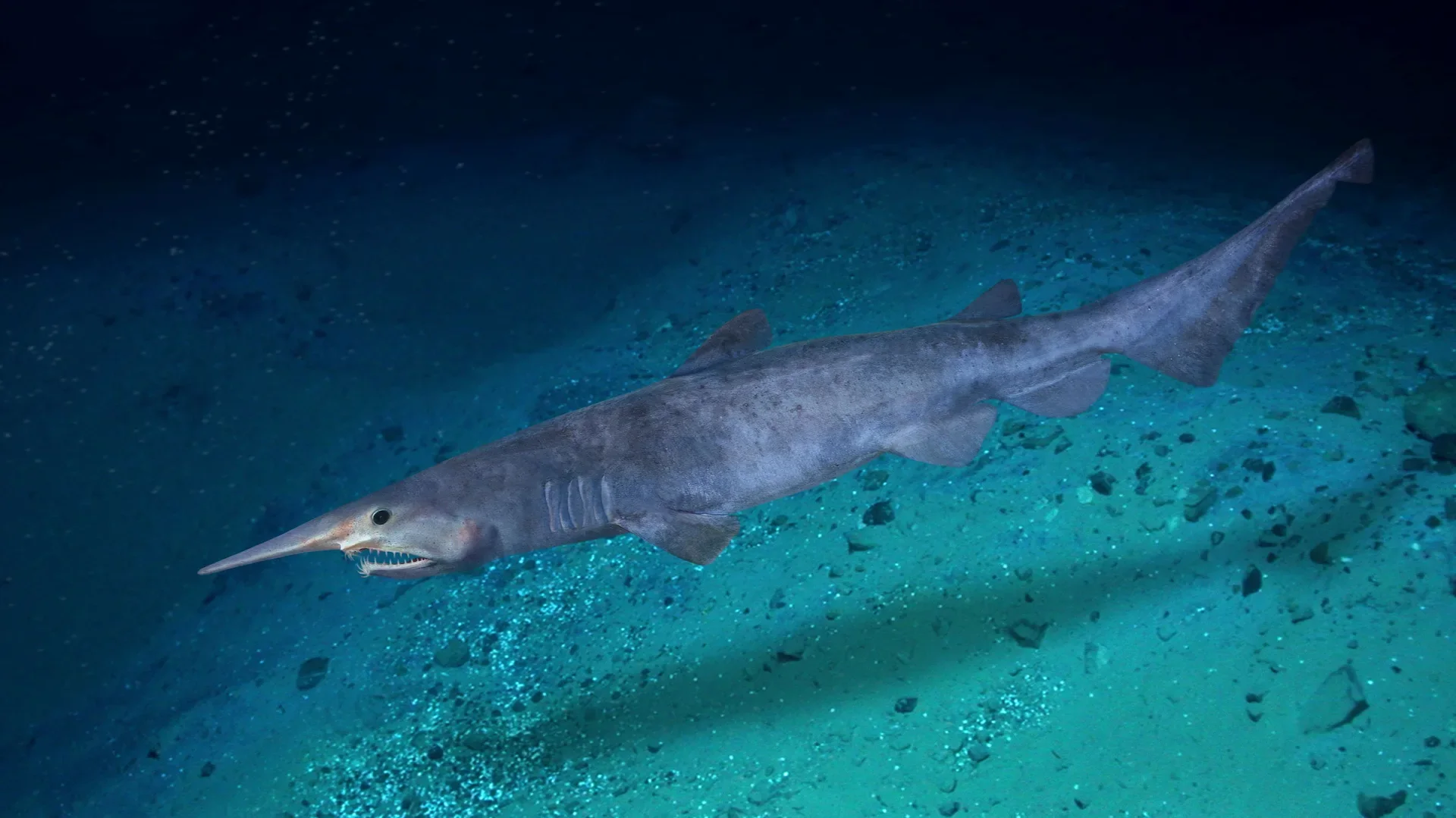
Fish
Goblin shark
The long snout carries sensory organs, while the highly protrusible jaws move forward rapidly to capture prey.
Read profile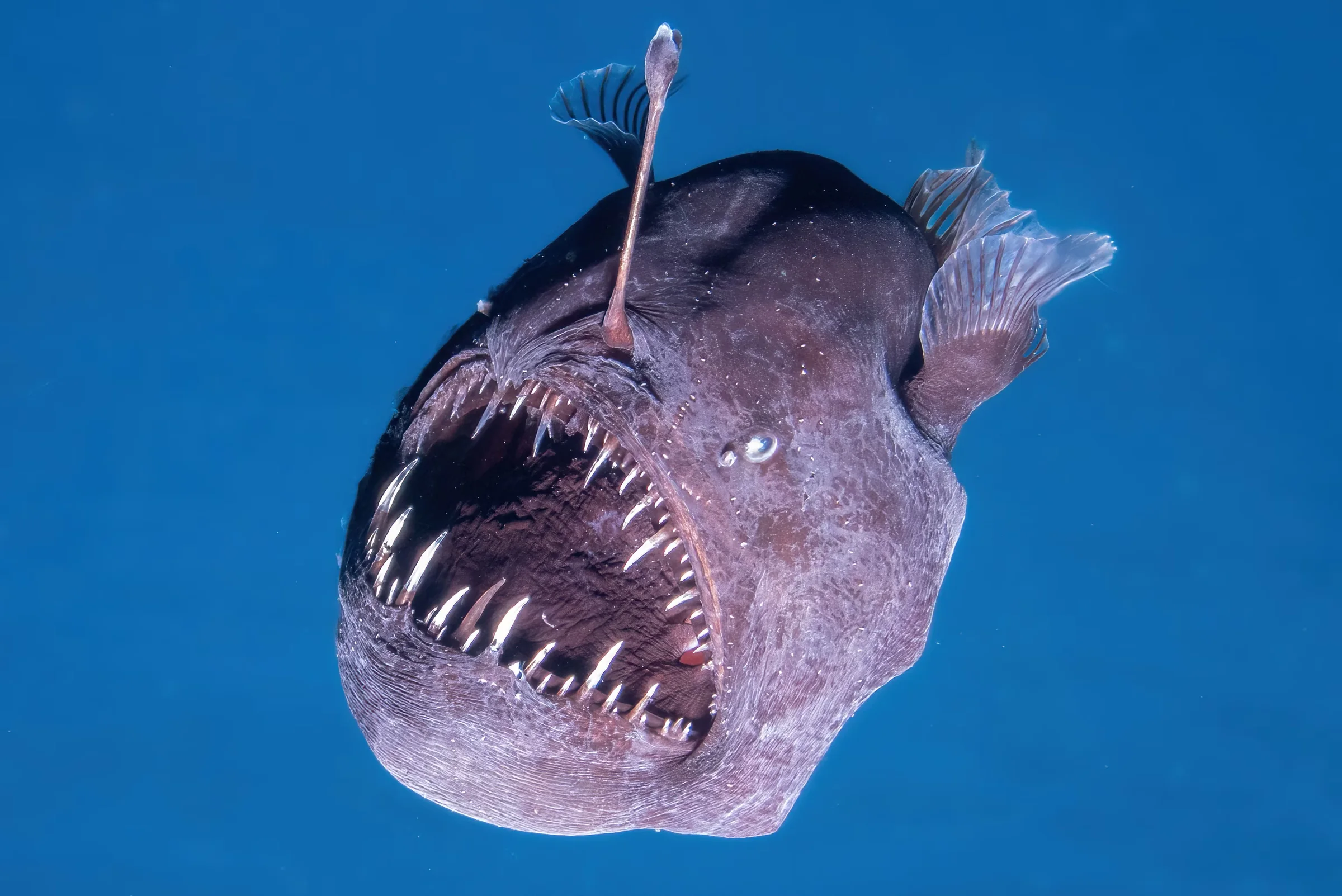
Fish
Deep-sea anglerfish
The lure is a modified dorsal-fin spine. In many deep-sea species its light is produced with help from symbiotic bacteria, but anglerfish biology varies across families.
Read profile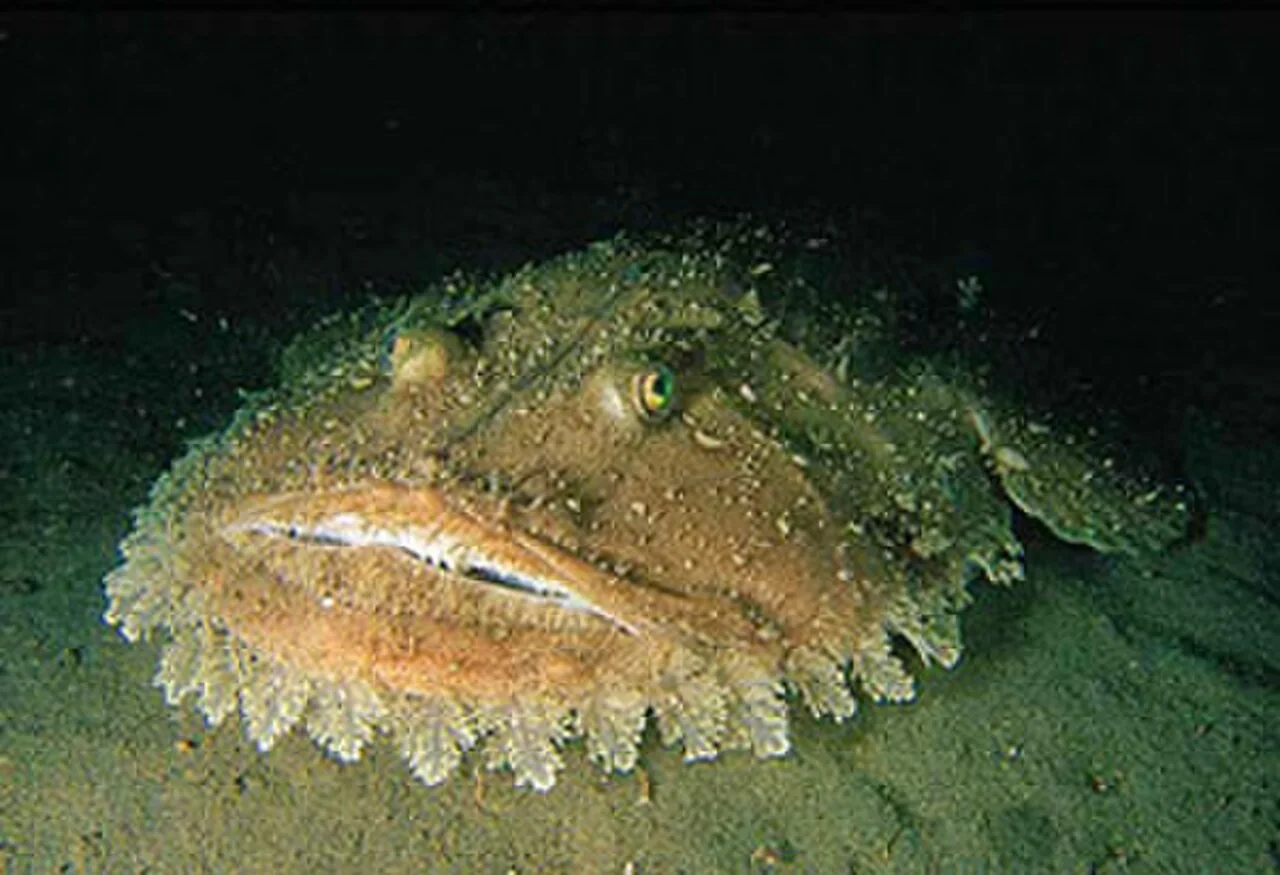
Fish
Monkfish
The first dorsal spine ends in a fleshy lure. Small movements attract attention while mottled skin and fringes conceal the waiting predator.
Read profile01
What makes deep water a demanding habitat?
Light fades quickly with depth, while temperature drops and food becomes less predictable. Animals cannot depend on vision, frequent meals or fast pursuit in the same way many shallow-water species can.
Pressure increases steadily as water deepens. A living animal is adapted to those conditions, but capture, rapid ascent and removal from water can distort soft tissue. The famous blobfish photograph is an extreme example of why habitat context matters.
02
How do deep-sea animals find and capture food?
Goblin sharks combine sensory organs in the snout with jaws that project forward. Many anglerfish use a modified fin spine as a lure, while monkfish hide against the seabed and bring prey close before striking.
These are different solutions to the same basic problem: food may be scattered, darkness limits early detection and an unsuccessful chase wastes energy. A large mouth, unusual jaw or quiet ambush can be more useful than constant speed.
03
How do deep-sea bodies cope with pressure and limited energy?
High pressure affects gases and the molecules that keep cells working. Deep-sea animals do not survive because they are simply tougher versions of surface animals. Their tissues, membranes, proteins and behaviour operate within a narrow set of cold, high-pressure conditions.
Energy is equally important. Slow movement, reduced muscle, neutral buoyancy or a sit-and-wait feeding strategy can lower the cost of living when meals are rare. Not every deep-sea species uses every solution, so depth and lineage still matter.
04
Why are deep-sea animals easy to misrepresent?
Most people meet deep-sea animals through trawl specimens, museum photographs or brief submersible footage. Nets can damage delicate structures, while pressure change and removal from water can alter shape and colour before a photograph is taken.
A reliable description separates the living animal from the captured specimen. It also names the species and depth when possible. The word deep sea covers a vast range of environments, from the continental slope to abyssal plains, and one photograph cannot represent them all.
Continue exploring
Compare this guide with the wider collection.